
流ルル日々、紡ぐ手 -ジーンズ産業を媒介とした河川堤防一体型建築による川港文化の再生- Flowing Days, Weaving Together.— How Living with the Takahashi River, Denim Craft, and River Transport Shape Collective Flood Resilience —
村上裕菜 Yuna MURAKAMI
作品コンセプト
- JP
- EN
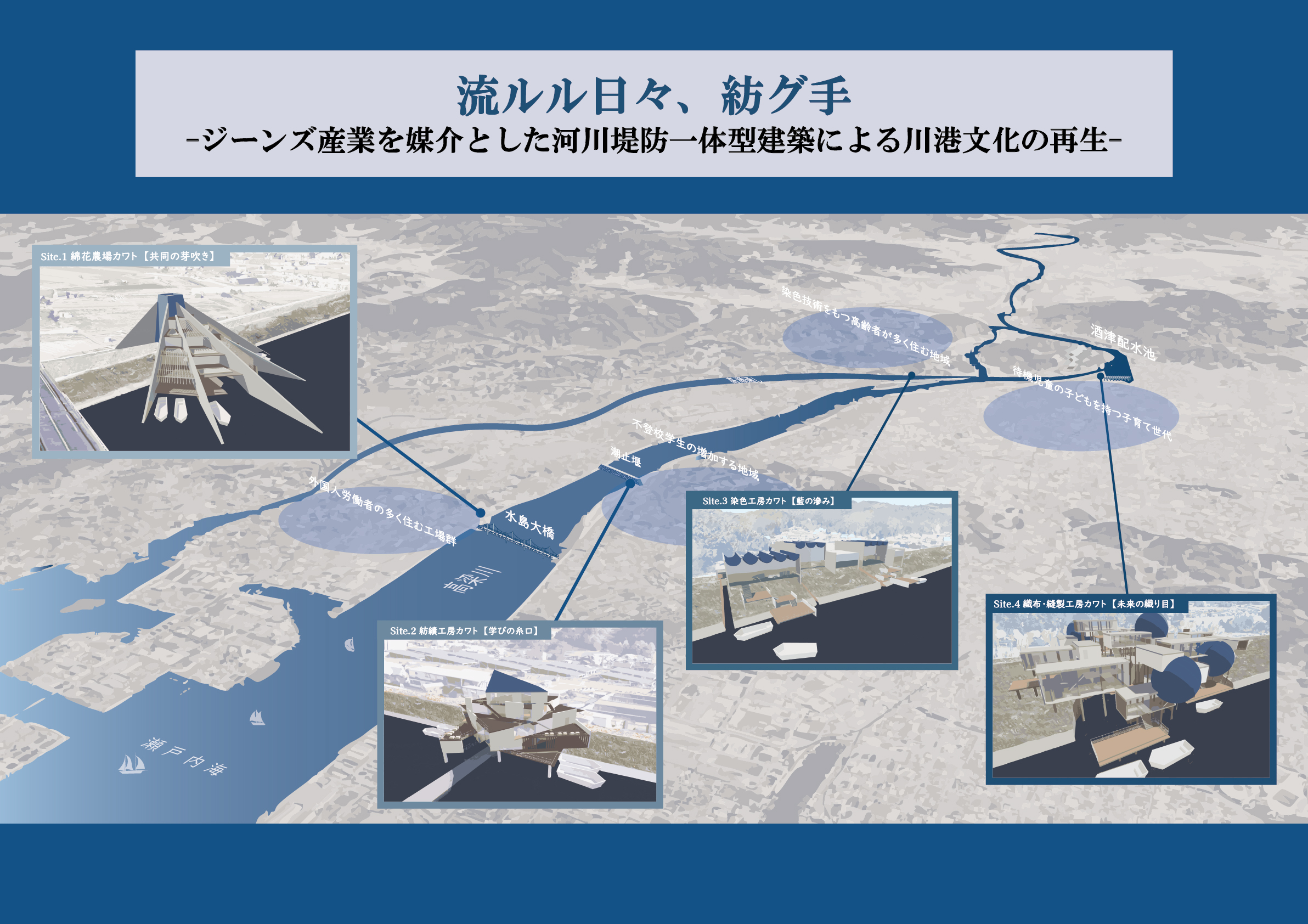
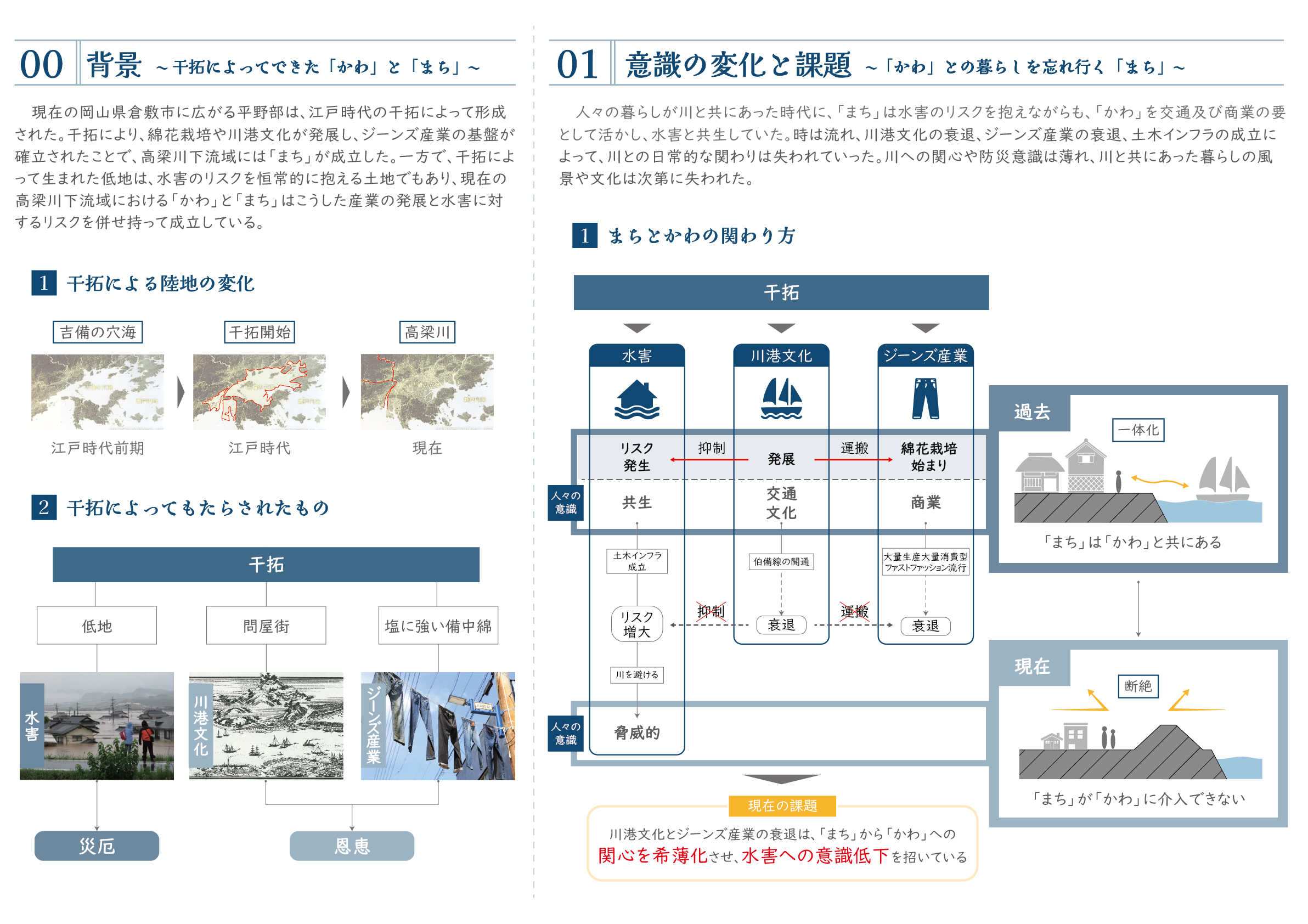
現在の倉敷市は、ジーンズ産業と川港文化の衰退を契機に、川との関係が断たれ、関心や水害意識が低下している。
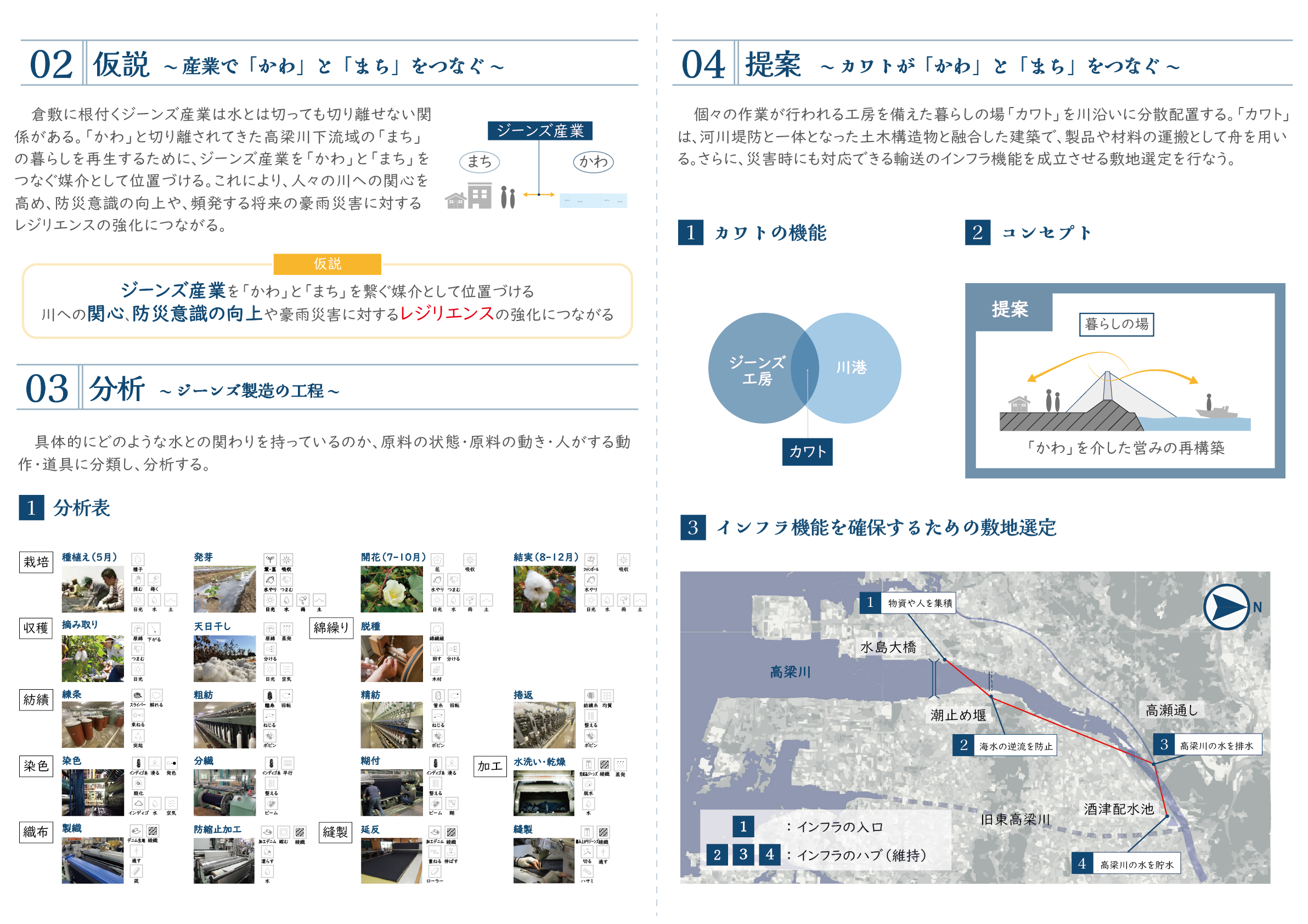
まちの背景に注目し、地域に今なお残るジーンズ産業を媒介とした河川堤防一体型建築による川港文化の再生を提案する。
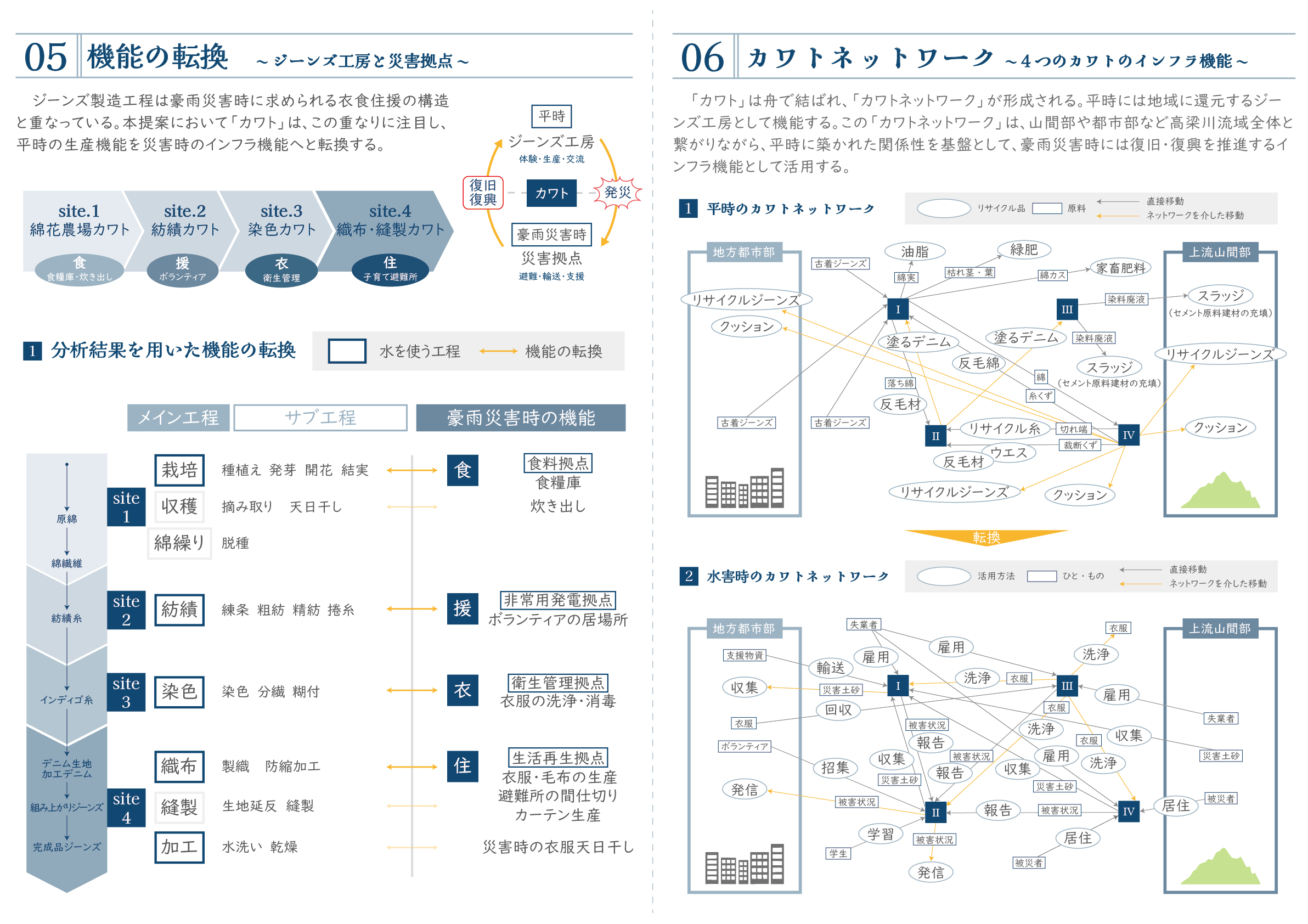
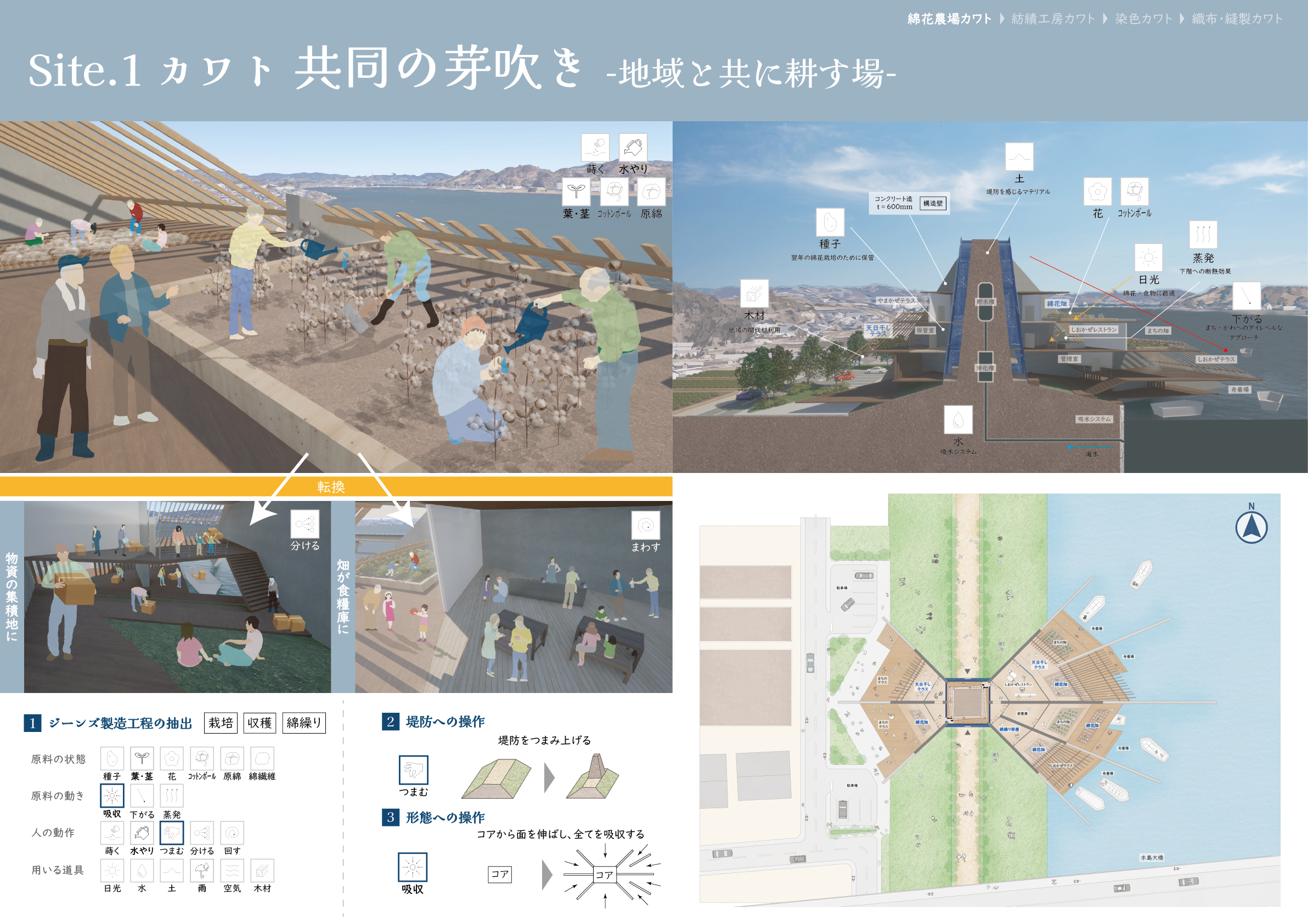
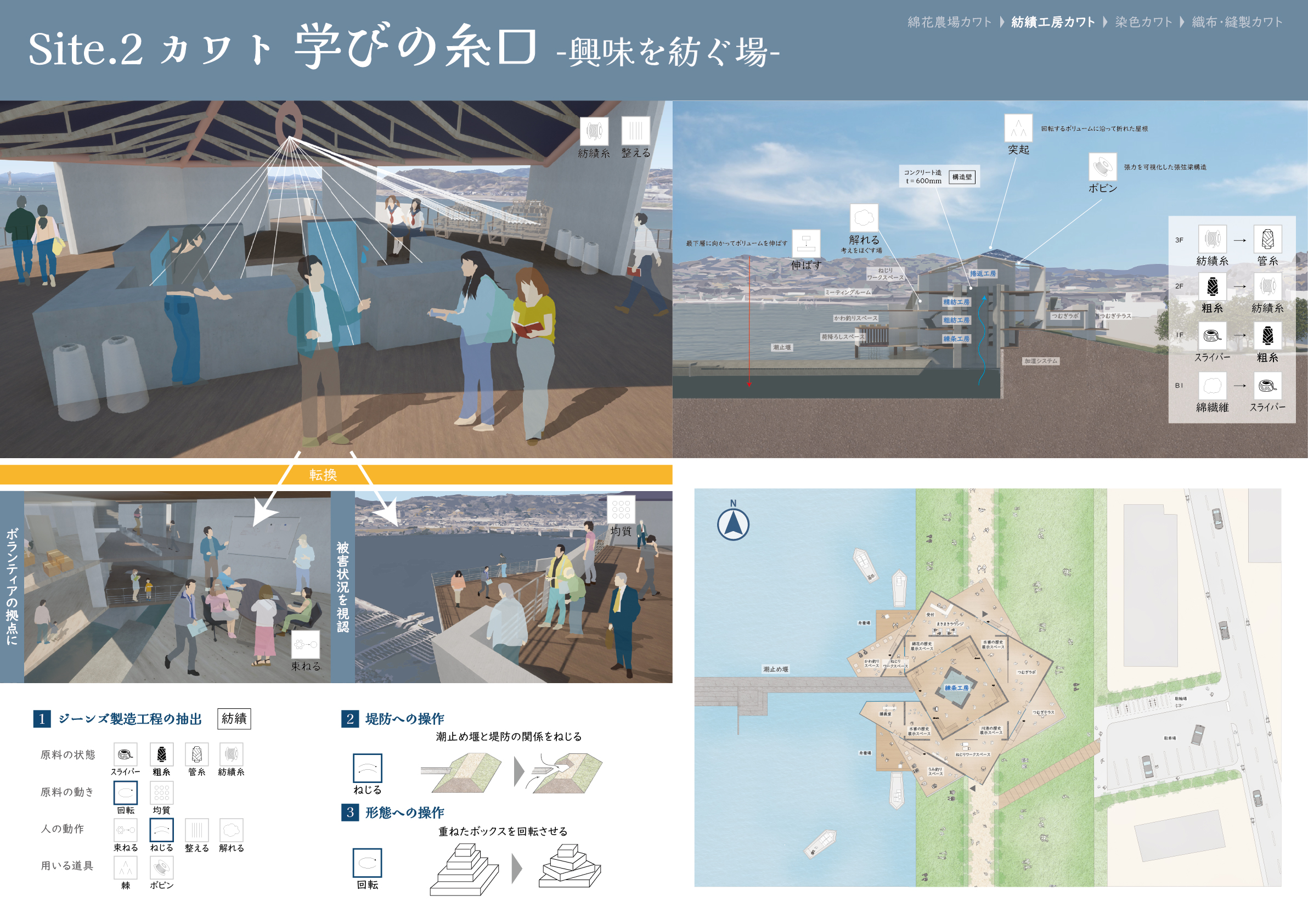
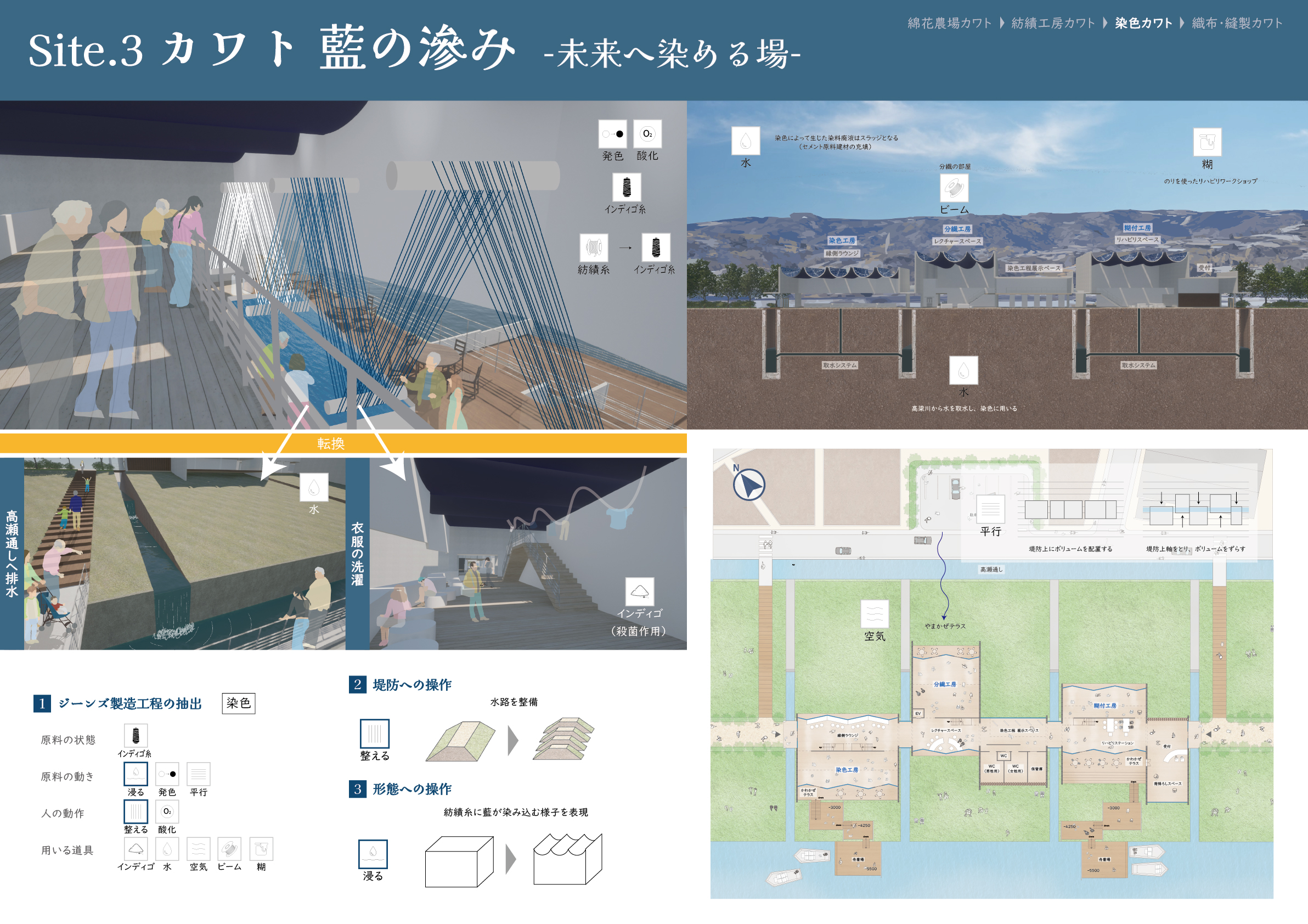
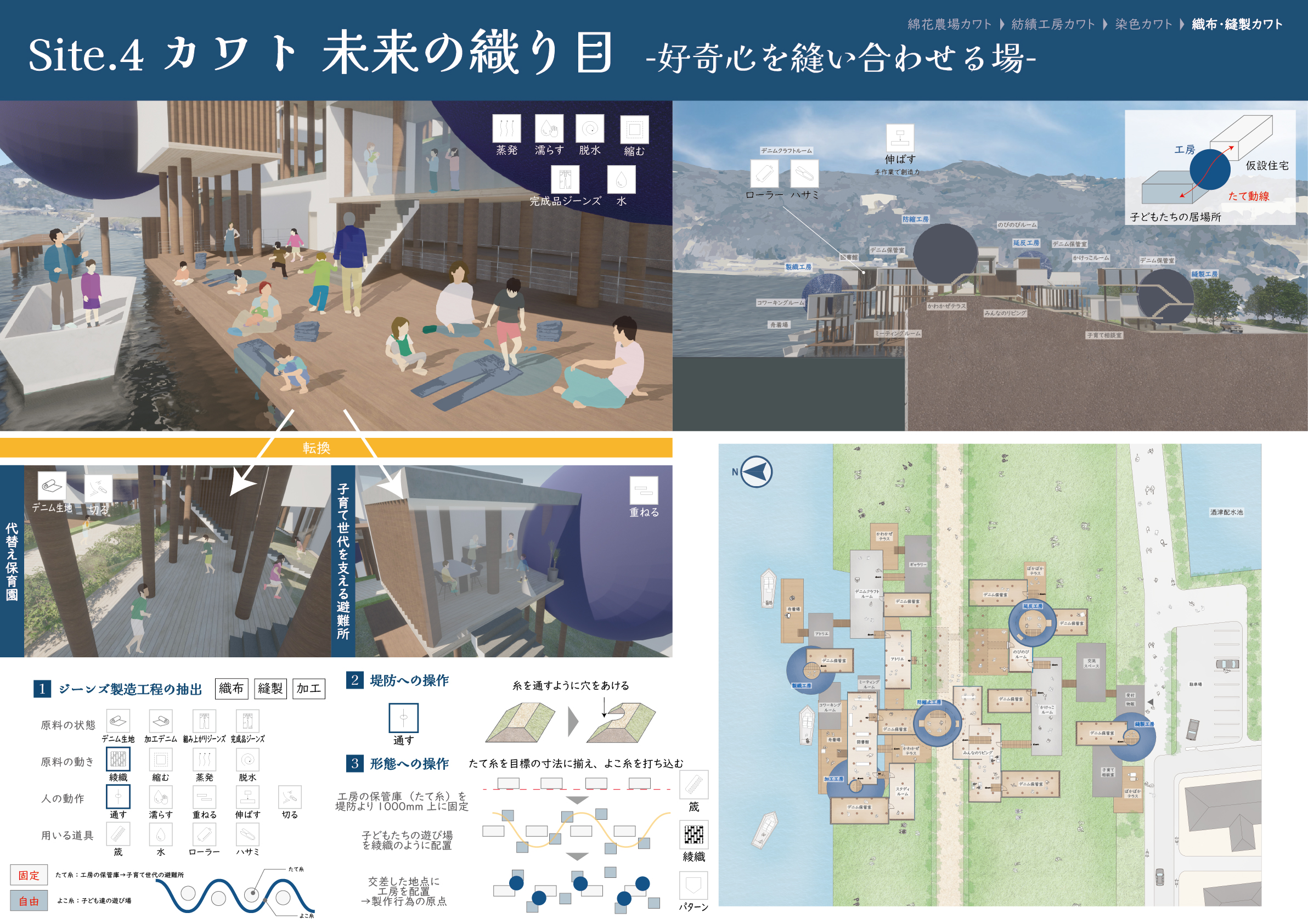
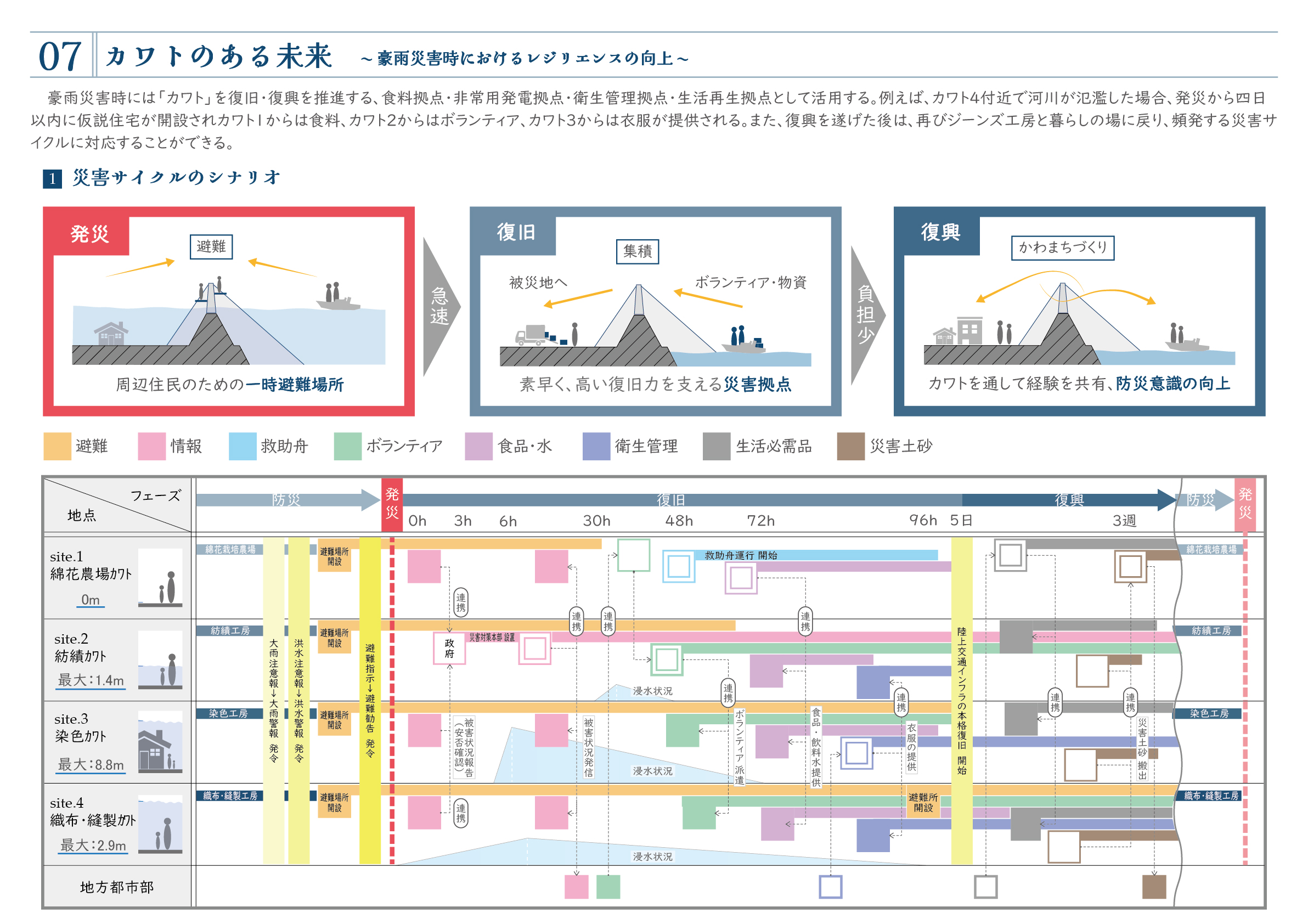
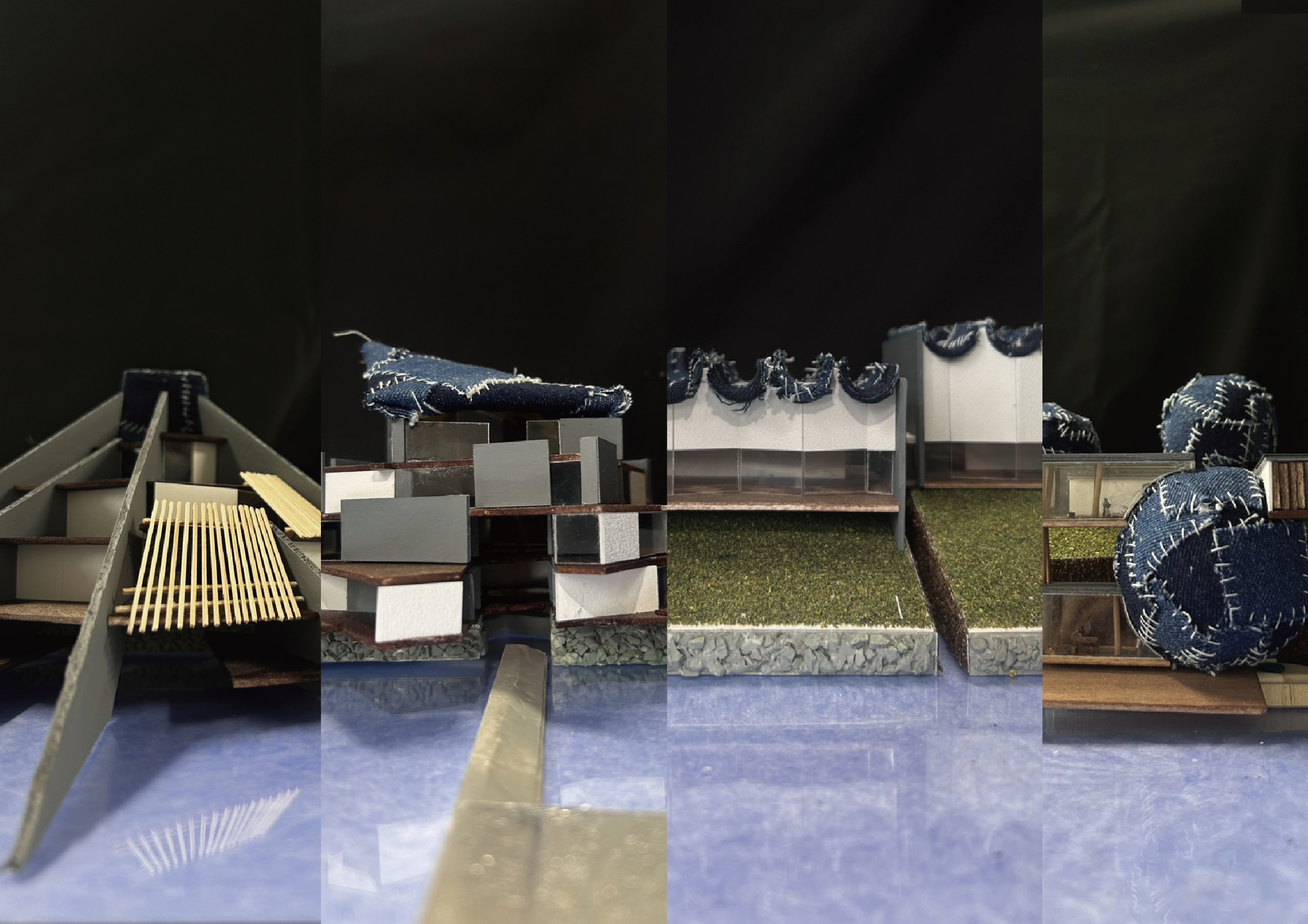
本提案では、「カワト」を高梁川沿いの堤防と融合するかたちで4つ配置する。ジーンズ産業を工程ごとに分析し、各カワトに組み込むことで、川と関わる仕組みをつくる。4つのカワトは、平時から強く結びついており、豪雨災害時には迅速で経済負担の少ない、復旧・復興インフラとして機能する。4つのカワトが連携することで、産業と人、人とまちが川を介して結ばれるカワトネットワークを形成し、災害時にも強いまちを目指す。
In present-day Kurashiki City, the decline of the jeans industry and river port culture has severed the relationship between the “town” and the “river,” resulting in a decreased interest in the river and a weakened awareness of flood risks.
Focusing on the historical background of the town, this proposal aims to revive the river port culture through levee-integrated architecture, using the jeans industry—still remaining in the region—as a medium.
In this proposal, four “Kawato” are placed along the Takahashi River, merging with the river embankment. By analyzing the jeans industry according to its production processes and incorporating each process into the respective Kawato, a system is created that encourages interaction with the river.
These four “Kawato” are strongly connected in everyday life, while during heavy rainfall disasters they function as an infrastructure for rapid recovery and reconstruction with minimal economic burden.
Through the cooperation of the four “Kawato”, a “Kawato Network” is formed, in which industry and people, as well as people and the town, are connected through the river. This network ultimately aims to create a disaster-resilient city.